In order to reduce the amount of smoke and dust in the welding workshop and protect the health of workers, the state stipulates certain technical standards and mandatory measures. At present, the commonly used methods mainly include workshop ventilation, personal labor protection and dust removal.
(1) Ventilation
Ventilation means that the air in the workshop and the air outside the workshop maintain good circulation, and the welding fumes are rapidly expanded through the flowing air flow, and flow out of the workshop together with the air, reducing the amount of smoke and dust in the workshop, and purifying the air in the workshop, thereby reducing the effect of dust on workers. health hazards. In addition to considering more windows in the design of the workshop, wall fans and roof fans can be added to speed up the flow of air to increase the ventilation effect. Ventilation does not collect and deal with welding fumes, but only reduces the content of smoke and dust in the workshop through the exchange of air inside and outside the workshop.
Ventilation can play a certain role in reducing welding fumes in the workshop, and the cost is low. However, for workshops with a large amount of welding and soot, the effect is not ideal. The welding fumes inside and outside the workshop will either enter the atmosphere or fall to the ground, which will still cause certain pollution to the environment and air inside and outside the workshop. Moreover, ventilation has great geographical limitations. In winter, the ventilation of the workshop in the northern region will cause a large amount of heat loss, resulting in a lower temperature in the workshop and affecting the operation of the workshop workers. If supplying hot air, it will consume a lot of energy. In the hot south area, if the workshop uses refrigeration and air conditioning to cool down in summer, ventilation cannot be used to reduce the welding fume concentration in the workshop.
(2) Labor protection
Mainly for individuals, it has no effect on preventing the spread of welding fumes, reducing the amount of welding fumes in the workshop, and purifying the air in the workshop. Personal labor protection to prevent smoke and dust is generally an ordinary mask. Now there are some new welding-specific protective covers that not only protect the eyes from arc light damage, but also have a filter device that delivers evolved air to the operator through pipes, completely avoiding the inhalation of air with welding fumes, which is harmful to labor have played a good protective effect. The disadvantage is that it cannot improve the environmental conditions of the workshop, and the protective cover is expensive and difficult to popularize.
(3) Dust removal
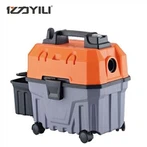
The difference between dust removal and ventilation is that it increases the collection and centralized treatment of welding fume. There are two main types of dust removal: one is to install a vacuum arm at the welding point or the location where the welding fumes are generated, and the welding fumes are sucked into the pipeline before they spread widely, and then they are transported to the outside of the workshop or processed centrally through the pipeline. . The advantage of this type of method is that welding fumes do not spread to the workshop and have minimal impact on worker health. Of course, if it is directly discharged into the atmosphere without treatment, it will also cause pollution to the natural environment. If the air can be circulated into the workshop through effective filtration treatment, it is the best choice for the workshop with heating in the north in winter and the workshop with refrigeration and air conditioning in the south in summer, which can avoid the loss of heat and cooling.