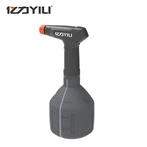
Classification of agricultural knapsack sprayers
In order to use the most widely used agricultural knapsack sprayer among several mainstream varieties, a simple comparison of advantages and disadvantages is made for the reference of farmers and friends when purchasing. 1. General manual sprayer:
Advantages: 1. low price. 2. The parts that are easy to maintain are cheap. Disadvantages: 1. Low efficiency, high labor intensity, not suitable for large-scale operations. 2. The liquid has the phenomenon of running, running, running, leaking, and dripping. Operators are easily wetted by liquids, easily poisoned, and not environmentally friendly. 3. The maintenance rate is too high and too troublesome.
two. High pressure automatic atomizer:
Advantages: 1. High efficiency (up to 3 to 4 times that of general manual atomizers), low labor intensity, and continuous operation.
2. The maintenance rate of wearing parts is the lowest, and there is basically no maintenance cost. 3. The atomization reaches or exceeds the electric sprayer, and the direct spray distance reaches 7-11 meters.
Disadvantages: 1. It takes about two minutes before spraying to press the solution into the spray.
2. The use method is different from other sprayers. You need to understand the manual before you can use it.
three. Electric sprayer:
Advantages: 1. High efficiency (up to 3 to 4 times that of general manual sprayers), low labor intensity and easy to use.
Make a good first impression and sell easily
Disadvantages: 1. The battery capacity determines the continuous working time of the sprayer.
2. There are too many brands and models, different parts are not easy to maintain, and the maintenance cost is too high. No problem with battery after warranty expires
Almost, it costs more than 100 yuan to replace, and the pump is also prone to problems and is not easy to repair.
3. Since some electrical equipment is involved, it must be repaired by professionals.
4. Electric sprayer
Advantages: 1. High working efficiency and good spraying effect.
Disadvantages: 1. The purchase price is high, and the use cost is high, ranging from a few cents to a dollar per barrel of water and oil.
2. Heavy, noisy, polluted, high temperature, poor operating environment.
3. Professional maintenance is required.